
 Best value
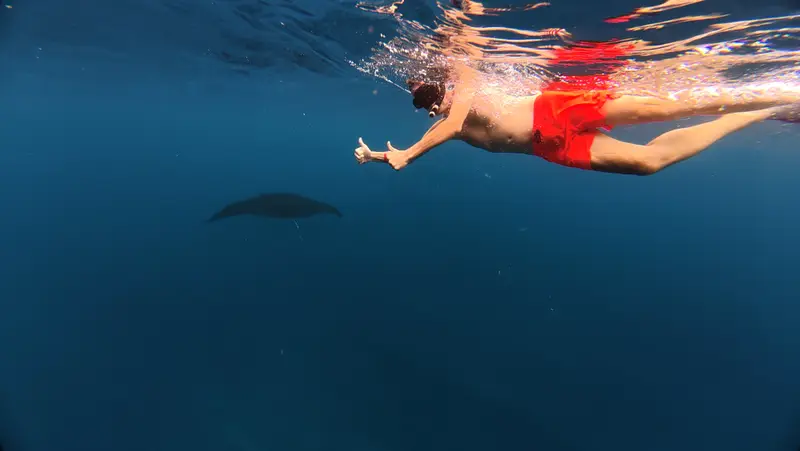
Manta Bay Snorkeling
per personIDR 200,000≈ $13 USD
Details Mantas live here all year, but sea conditions change. Here is what each season actually looks like from the boat.
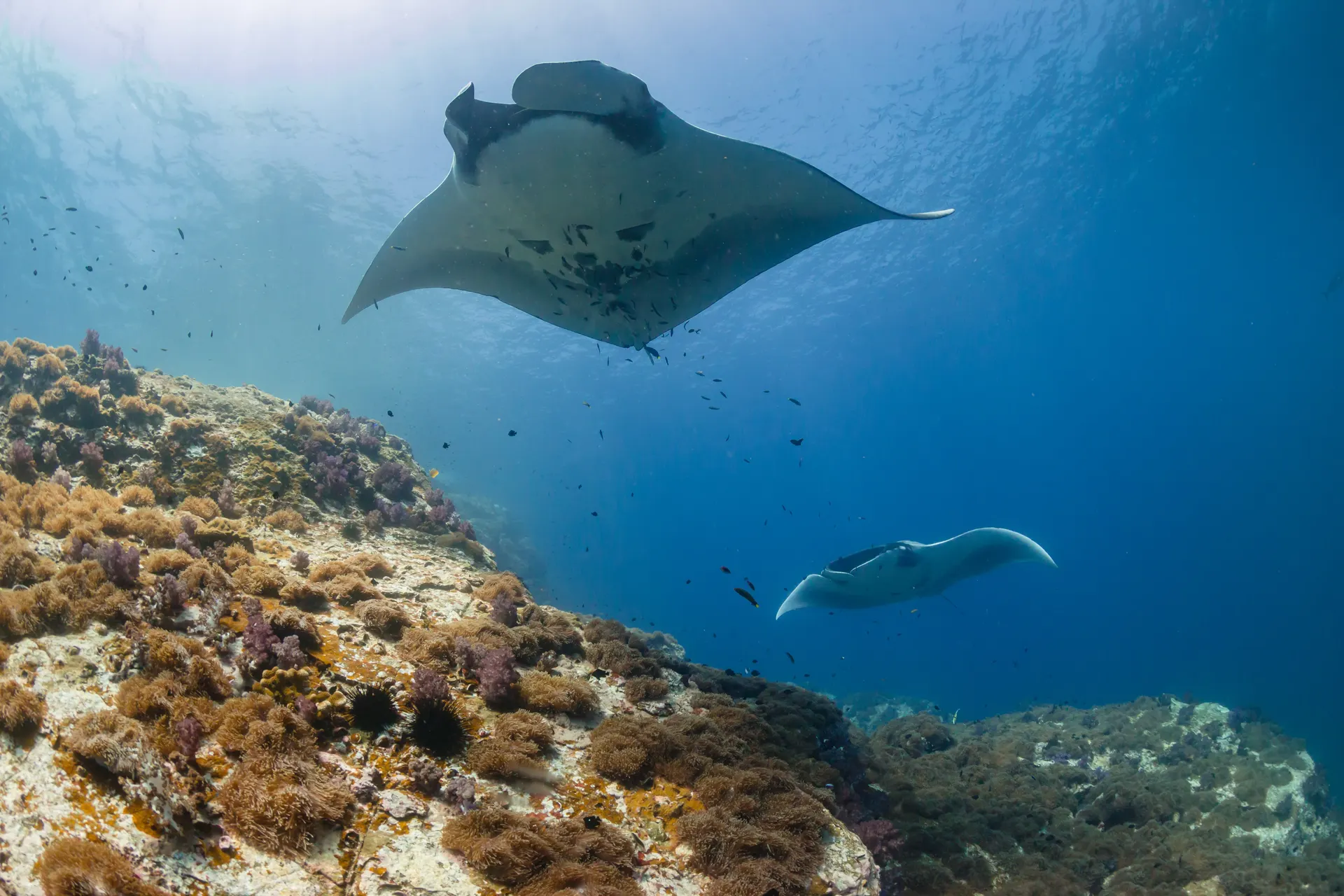
Reef manta rays (Mobula alfredi) are resident around Nusa Penida. They do not migrate away, which is why we can run manta trips twelve months a year. What changes is the sea.
The trade winds blow from the south-east, the sky is clear and the water is at its clearest — 20 to 30 metres on a good day. Manta Point on the south coast is open on most mornings. This is the best window for the three-hour Manta Point trip and for underwater photography.
July to October is also mola mola (oceanic sunfish) season. They are seen by divers more than snorkelers, but we do occasionally spot one from the surface at Crystal Bay.
Rain comes mostly in the afternoon and rarely stops a morning trip. The bigger issue is south-coast swell in December, January and February, when the harbour master closes Manta Point more often. Boats run to Manta Bay instead, which is sheltered and still delivers mantas on most days.
Mornings are calmer and the light is better. Mantas feed at Manta Bay on the incoming tide, and our captains time the departure to the tide table rather than the clock, which is why the 09:30 boat sometimes leaves at 09:15.
If you can choose, come between May and September and book the Manta Point trip. If you are here in January, book Manta Bay and you will very likely still see mantas — just tell us the day before so we can give you the real forecast.
Best value Best value
 Tour and Snorkeling